Search press releases
Fishing for stickleback can reverse the negative trend in the Baltic Sea
Stickleback populations has increased sharply in the Baltic Sea and the Gulf of Bothnia. It is also a species that currently has no commercial value. With support from the BalticSea2020 foundation, researchers at Umeå University are considering the possibility of commercially fishing stickleback to provide fish feed.
Fishing for stickleback could have a positive impact on the environment in terms of the promotion of predatory fish species, but also by the reduction of the symptoms of eutrophication along Baltic coasts.
The increase in the numbers of stickleback has been associated with negative effects on Baltic coast ecosystems. This is most likely due to the stickleback eating the fry of predators such as perch and pike and thus having an effect on the growth of stocks of such. Stickleback also feed on organisms living on the sea bed, such as zooplankton. This has the effect of reducing their consumption of phytoplankton, which in turn leads to increased propagation of algae in the Baltic Sea’s coastal areas.
The fishing of stickleback could reverse the negative trends along the Baltic coast. This is what biologists at Umeå University are saying, and they are exploring the possibility of commercially harvesting stickleback as fish feed to also discover whether reducing the stickleback population would increase opportunities for predatory fish, such as perch and pike, to recover their numbers.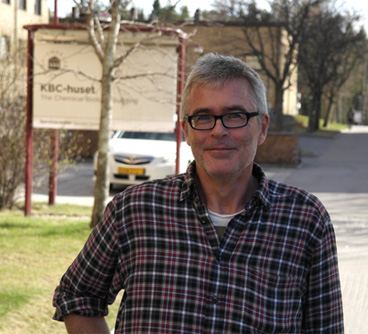 “We believe that commercial fishing of stickleback will benefit the environment of the Baltic Sea, in part through beneficial effects on coastal predatory fish populations, but also because it prevents algal blooms”, says project manager Pär Byström, Senior Lecturer at the Department of Ecology and Environmental Science at Umeå University.
He further explains that fishing stickleback also increases the possibilities for future expansion of the aquaculture industry in the Baltic Sea catchment area in, for example, power reservoirs, resulting in net nutrient salt loads into the Baltic Sea will be reduced to zero if the feed used is based on ingredients from the same maritime source. Stickleback fishing would also produce additional income for the fishing industry, since such activities are not likely to conflict with other stakeholders and users of the Baltic’s fish stocks.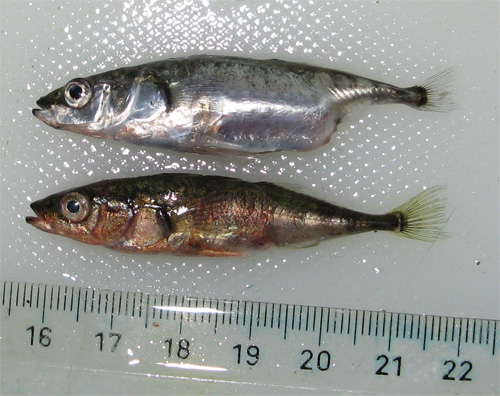 The project is divided into two phases. In the first of these, the viability of fishing stickleback for the production of fish feed will be examined. If this precondition exists, the project will continue into its second phase, the aim of which is to stimulate commercial fishing of stickleback, production of fish feed and large-scale evaluation of the impact on the coastal ecosystem, as the quantity of stickleback diminishes.
“We at the Foundation are delighted to be joining forces with Umeå University and are looking forward to the results from this project, which we hope will contribute to an improvement in predatory fish stocks and a reduction in eutrophication”, says Conrad Stralka, BalticSea2020’s Operations Manager.
About the project
Phase 1 of the project is in progress throughout 2015 and is being funded by BalticSea2020 to the tune of SEK 2.577 million. The project is led by Assistant Professor Pär Byström at the Department of Ecology and Environmental Science, Umeå University.
BalticSea2020 is a private foundation whose goal is to contribute to measures to improve the environment in the Baltic Sea until the year 2020. This will be achieved by utilising a grant of SEK 500 million in concrete measures taken in research, advocacy and active involvement in the project.
For more information, please contact:
Pär Byström, Department of Ecology and Environmental Science
Phone: +46(0)90 – 786 94 93
Conrad Stralka, Operations Manager at BalticSea2020
Phone: +46(0)8 – 673 97 62
Photo: Umeå University
Our focus areas
 The stock of predatory fish is crucial for the state of the Baltic Sea. Therefore, the Foundation worked to ensure that the environmental effects of fishing should be a central part of the EU's Common Fisheries Policy. The Foundation also worked on projects to increase the proportion of predatory fish, such as cod, pike and perch. Read more The stock of predatory fish is crucial for the state of the Baltic Sea. Therefore, the Foundation worked to ensure that the environmental effects of fishing should be a central part of the EU's Common Fisheries Policy. The Foundation also worked on projects to increase the proportion of predatory fish, such as cod, pike and perch. Read more |
|
|
|

Read more...

Read more...

Documentaries and films about the Baltic Sea